Table Of Content

This will prove beneficial not only to you and your design practice but also to others—your future clients, maybe. When the solution was tested, the truck was able to drive free with ease, having suffered only the damage caused by its initial attempt to pass underneath the bridge. The story symbolizes the struggles we face where oftentimes the most obvious solutions are the ones hardest to come by because of the self-imposed constraints we work within.
Design Thinking and Good Governance – Kashmir Observer - Kashmir Observer
Design Thinking and Good Governance – Kashmir Observer.
Posted: Tue, 06 Feb 2024 08:00:00 GMT [source]
Use design thinking to keep learning about your users
A good example of these two approaches in action is an empirical study carried out by Bryan Lawson, a Professor of Architecture at the University of Sheffield. Lawson wanted to investigate how a group of designers and a group of scientists would approach a particular problem. As the name suggests, solution-based thinking focuses on finding solutions; coming up with something constructive to effectively tackle a certain problem. This is the opposite of problem-based thinking, which tends to fixate on obstacles and limitations.
What is Agile project management?
The Apples, Airbnbs, and Ubers of this world were all borne of innovation. Now, the challenge that all of these companies—and your company too, no doubt—face is to continue that innovation in order to maintain or further advance their position in their respective markets. Innovation can’t be a one-time affair; it needs to be part of the company’s DNA. Our easy online application is free, and no special documentation is required. All applicants must be at least 18 years of age, proficient in English, and committed to learning and engaging with fellow participants throughout the program. The applications vary slightly from program to program, but all ask for some personal background information.
Recent Product Management Articles
The main value of design thinking is that it offers a defined process for innovation. While trial and error is a good way to test and experiment what works and what doesn’t, it’s often time-consuming, expensive, and ultimately ineffective. On the other hand, following the concrete steps of design thinking is an efficient way to develop new, innovative solutions.
Stage 3: Ideate—Challenge Assumptions and Create Ideas
This helps identify areas of friction and understand customer preferences. The aim of design thinking is to pool a diverse variety of perspectives and ideas; this is what leads to innovation! Design thinking encourages collaboration between heterogeneous, multidisciplinary teams which may not typically work together. Design thinking originally came about as a way of teaching engineers how to approach problems creatively, like designers do. One of the first people to write about design thinking was John E. Arnold, professor of mechanical engineering at Stanford University.
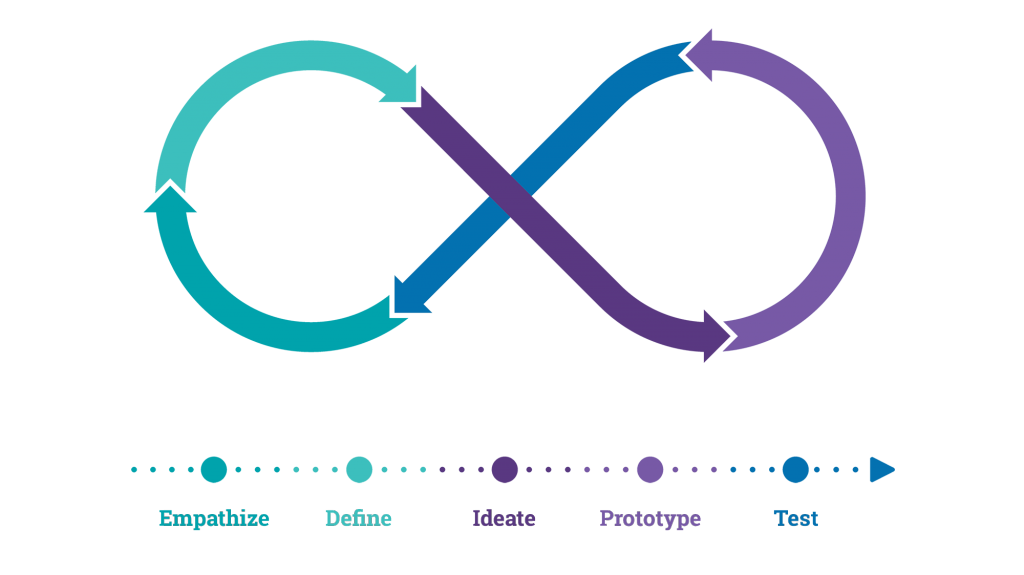
This simply means that the design team continuously uses their results to review, question and improve their initial assumptions, understandings and results. Design thinking lets designers discover what solutions are most effective early on in a product’s development, reducing mistakes and making for a possibly higher ROI down the line. Without design thinking, a designer may make a product decision based only on quantitative data or perceived user wants, which can make for increased risk of product dissatisfaction upon release. Plus, design thinking’s ability to test multiple decisions before release means designers can invest properly into what their users need, instead of applying quick fixes or guessing on how to make a product succeed.
The End Goal of Design Thinking: Be Desirable, Feasible and Viable
In true design thinking fashion, we’ll continue to gather user feedback in order to iterate on and improve our current solution. It’s not just about coming up with ideas; it’s about turning them into prototypes, testing them, and making changes based on user feedback. Design thinking is an iterative approach, so be prepared to repeat certain steps in the process as you uncover flaws and shortcomings in the early versions of your proposed solution. The design thinking process outlines a series of steps that bring this ideology to life—starting with building empathy for the user, right through to coming up with ideas and turning them into prototypes. Central to the design thinking process is prototyping and testing (more on that later) which allows designers to try, to fail, and to learn what works.
As a process for innovation
While we know a lot about what practices stimulate new ideas and creative solutions, most innovation teams struggle to realize their benefits. IDEO design consultancy is formed by combining three industrial design companies. They are one of the first design companies to showcase their design process, based on design methods and design thinking. To achieve divergent thinking, it may be important to have a diverse group of people involved in the process. Design teams typically begin with a structured brainstorming process of "thinking outside the box". Convergent thinking, on the other hand, aims for zooming and focusing on the different proposals to select the best choice, which permits continuation of the design thinking process to achieve the final goals.
Affinity Diagrams: How to Cluster Your Ideas and Reveal Insights
Read “The Designful Company” by Marty Neumeier, a book that focuses on how businesses can benefit from design thinking, and “Product Design and Development,” co-authored by Eppinger, to better understand the detailed methods. You’ve brainstormed, come up with all sorts of ideas, and worked with your team to boil those ideas down to the ones you think may actually solve the problem you’ve defined. Once you master the skills central to the design thinking approach, they can be applied to solve problems in daily life and any industry. The goal is to propose as many solutions as possible—no matter how 'good' or 'bad' they might be—based on what you learn through user empathy and collaboration on a problem statement. The testing phase will quickly highlight any design flaws that must be addressed. Based on what you learn through user testing, you’ll go back and make improvements.
In 1959, he wrote “Creative Engineering,” the text that established the four areas of design thinking. As businesses continue to recognize the need for design thinking and innovation, they’ll likely create more demand for employees with those skills. The goal is to ultimately overcome cognitive fixedness and devise new and innovative ideas that solve the problems you identified. Continue to actively avoid assumptions and keep the user at the forefront of your mind during ideation sessions. In the online course Design Thinking and Innovation, Harvard Business School Dean Srikant Datar leverages a four-phase innovation framework.
As of November 2021, there were 29,648 job postings in the United States advertising design thinking as a necessary skill—a 153 percent increase from November 2020, and a 637 percent increase from November 2017. On top of a clear, defined process that enables strategic innovation, design thinking can have immensely positive outcomes for your career—in terms of both advancement and salary. Once the problem statement or question has been solidified—not finalized—the next step is ideation. You can use a tool such as systematic inventive thinking (SIT) in this stage, which is useful for creating an innovative process that can be replicated in the future.
By involving employees in problem-solving and encouraging experimentation, TPS has enabled Toyota to innovate and adapt to changing market demands. This exercise helps you understand a situation or problem by identifying what’s working, what’s not, and areas for improvement. You start by listing out the problem, then identifying the positive aspects (the rose), negatives (thorn), and possible solutions for improvement (the buds).
Integrating Design Thinking into your process can add huge business value, ultimately ensuring that the products you design are not only desirable for customers, but also viable in terms of company budget and resources. To learn more, check out this video introduction to design thinking, led by expert designer Camren Browne. For now, let’s take a look at the design thinking process and what that entails. If you’re going to adopt a design thinking framework, it’s wise to do an internal audit of your staffing needs, said Marcello Magalhaes, founder and chief design officer at brand design firm Speakeasy. His firm helps clients like Coca-Cola, Fanta, McDonald’s and Burger King find the right creative talent for special product launches and branding campaigns — roles that often don’t exist in-house.
Inherent to the Design Thinking process is the early and frequent testing of your solutions; this way, you can gather feedback and make any necessary changes long before the product is developed. The design thinking process should not be seen as a concrete and inflexible approach to design; the component stages identified should serve as a guide to the activities you carry out. The stages might be switched, conducted concurrently or repeated several times to gain the most informative insights about your users, expand the solution space and hone in on innovative solutions. As we’ve learned, Design Thinking is a solution-based approach to exploring and solving problems. It focuses on generating ideas with a specific problem in mind, keeping the user at the heart of the process throughout. For the user, this means better, more useful products that actually improve our lives.
The mistake they make is to try and empathize, connecting the stated problem only to their own experiences. This falsely leads to the belief that you completely understand the situation. But the actual problem is always broader, more nuanced, or different than people originally assume. Design thinking solution ideas can originate from anywhere in the user journey, from their experience signing up and onboarding to product usage and drop-off points.
Although we talk about the process in terms of sequential steps, it’s a highly iterative loop. With each phase, you’ll make new discoveries that may require you to revisit the previous stages. McKinsey analysis has found that some industries—such as telecommunications, automotive, and consumer product companies—have already made strides toward combining product and service into a unified customer experience. Read on for concrete examples of how companies have applied design thinking to offer innovative—and lucrative—customer experiences. As you may have guessed by now, design thinking goes way beyond just the way something looks. And incorporating design thinking into your business is more than just creating a design studio and hiring designers.


No comments:
Post a Comment